Schedule 40 Pipe Weight Guide: Everything You Need to Know Before Buying
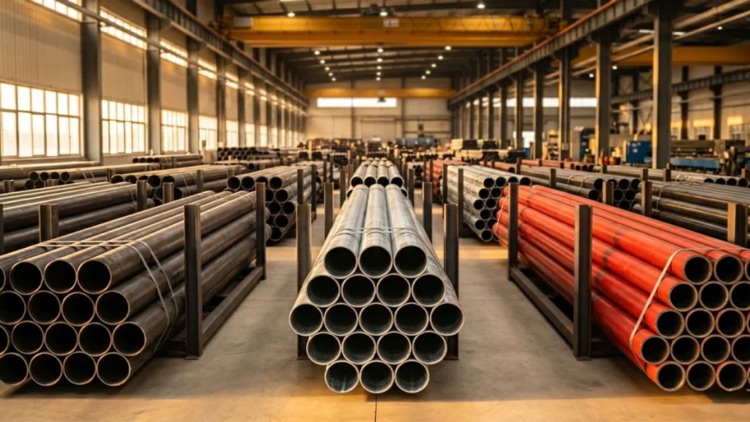
One of the most widely used steel construction, water system, and industrial project pipes is the schedule 40 pipe. Most engineers and buyers, before purchasing a pipe, are concerned with the schedule 40 pipe weight due to the direct influence on cost, transportation, and installation planning. Not all sizes of Schedule 40 pipe have a fixed weight. The weight varies depending on diameter, wall thickness, and the type of material used. These basics will enable buyers to make good decisions and prevent errors in the procurement process.
What Schedule 40 Pipe Weight Means
Schedule 40 pipe weight refers to the overall weight of the pipe per unit length. It is commonly measured in:
- Kilograms per meter (kg/m)
- Pounds per foot (lb/ft)
The weight is calculated using three main factors:
- Outside diameter
- Wall thickness
- Steel density
Schedule 40 is a conventional series of thicknesses, and thus, pipes in this range are medium-wall thickness pipes as opposed to Schedule 10 and Schedule 80. Weight values are commonly used by buyers to determine the approximate amount of project materials and shipping costs.
Why Pipe Weight is Important for Buyers
Pipe weight plays an important role in purchasing decisions. It affects several stages of a project.
For example:
- Heavier pipes increase shipping costs.
- They require stronger handling equipment.
- They also influence storage and installation planning.
Conversely, lighter pipes are easier and less costly to transport, though they might not be required to support increased pressures. Pipe weight is also used by buyers in estimating the overall tonnage of big projects, and budgeting and logistics planning become more precise.
Difference Between Theoretical and Actual Weight
The schedule 40 weight of pipe in a real-world production might not be the same as the values on the charts.
This difference can result from factors such as:
- Manufacturing tolerances
- Coating layers
- Packing materials
In the case of hot-dip galvanized pipes, the weight of the pipes is greater than that of bare steel pipes due to the additional zinc coating. In others, the thickness of the walls can change within acceptable industry levels, which influences weight as well. Hence, consumers must consider chart values as approximates and not precise shipment values.
Effect of Coating on Schedule 40 Pipe Weight
Pipe coating can also influence the overall Schedule 40 pipe weight. Different types of coatings are applied to improve durability and corrosion resistance. These coatings add extra material to the pipe surface, which slightly increases the total weight. Because of this, coating should always be considered during weight estimation and transportation planning. Ignoring coating weight can lead to small but important differences in project calculations, especially when dealing with bulk quantities.
How to Estimate Total Project Pipe Weight
The calculation of the total weight of pipes is essential to large-scale projects where hundreds of thousands of meters of pipe are employed.
The calculation process is straightforward:
- Find the unit weight from the standard chart.
- Multiply it by the total pipe length required.
To illustrate, when a project requires 500 meters of 4-inch Schedule 40 pipe, the weight will be approximately 8, 035 kg. When this weight is summed with the weight of coating, packing, and transportation of the pipe, the weight will be higher. This aids in developing a more precise budget and shipping plan.
Common Mistakes Buyers Should Avoid
There are numerous errors made by buyers of Schedule 40 pipe weight.
Some of the most common include:
- Treating theoretical weight as the final shipment weight.
- Ignoring the additional weight of coating and packaging.
- Confusing the nominal pipe size with the actual outside diameter.
Schedule 40 vs Other Pipe Schedules
The Schedule 40 pipes are frequently contrasted with Schedule 10 and Schedule 80 to select an appropriate one to use in a project. Schedule 10 pipes are lighter and have finer walls. This can be applied in low-pressure systems. The schedule 80 pipes are heavier and have thicker walls and therefore are used in high-pressure applications. Knowledge of these differences assists the buyers in making the right choice of the pipe in terms of performance and weight.
Conclusion
The weight of the schedule 40 pipes is a major consideration in the planning, purchasing, and transportation of steel pipes in construction and industrial projects. It is based upon the size of the pipes, the thickness of the walls, and the density of the materials, and it is commonly approximated through standard tables and equations. The actual weight of the shipment, however, can vary, depending on production and coating variation. Learning the mechanics of weight and the calculation of weight, buyers will be able to make more correct choices and minimize project risks.